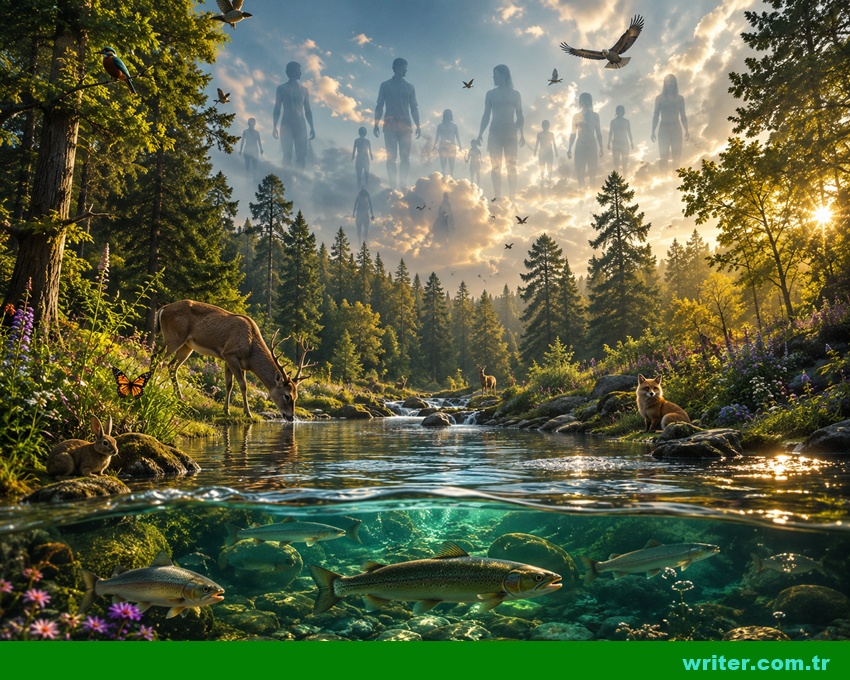
Imagine a World Without People
Perhaps one of humanity's greatest illusions is the belief that we are the rulers of the world.
We build cities that touch the sky, redirect rivers, cut roads through mountains, and create technologies that would have seemed impossible only a century ago. Over time, these achievements can make us feel as though the planet belongs to us.
But does it?
The Earth existed long before the first human being took a breath. Forests grew, oceans moved with the tides, volcanoes reshaped landscapes, and countless species lived and disappeared without human observation. Life was already unfolding its story long before we arrived.
Yet somewhere along the way, many of us began to see ourselves not as participants in nature, but as its owners.
We divide land with borders. We give names to mountains and oceans as if naming something grants possession of it. We speak of controlling nature, conquering nature, and exploiting natural resources.
The language itself reveals how often humanity places itself above the living world rather than within it.
And still, nature quietly reminds us of reality.
A powerful storm can stop an entire city.
An earthquake can redraw a landscape in minutes.
A drought can challenge the most advanced societies.
A single virus can travel across continents and alter daily life for billions of people.
For all our achievements, we remain dependent on the same things that sustained our ancestors thousands of years ago: clean water, fertile soil, breathable air, and a stable climate.
The truth may be uncomfortable.
Humanity is powerful, but not all powerful.
We are intelligent, but not separate from the systems that support life.
Every building stands on the ground. Every industry depends on natural resources. Every person relies on ecosystems they may never see and species they may never know exist.
A bee pollinating flowers.
Tiny organisms enriching the soil.
Forests producing oxygen and regulating rainfall.
Invisible processes sustain human civilization every day.
Without them, our technologies and economies would mean very little.
This raises an interesting question.
If humans disappeared tomorrow, the world would continue.
Rivers would still flow.
The sun would still rise.
Waves would still reach the shore.
Forests would gradually reclaim abandoned cities.
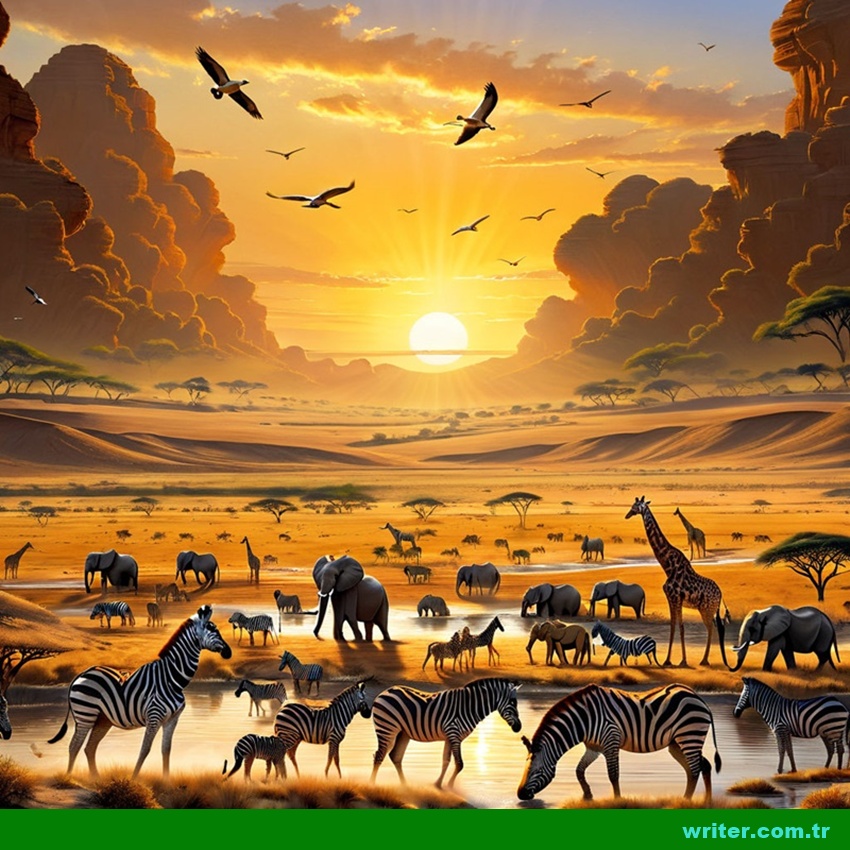
Wildlife would adapt to the changing landscape.
Nature would not stop because humanity was gone.
Yet if nature disappeared, humanity could not survive for long.
That difference reveals something important.
Perhaps we are not the masters of the Earth.
Perhaps we are guests.
Guests with remarkable abilities, extraordinary creativity, and immense influence, but guests nonetheless.
The challenge facing humanity may not be learning how to dominate the planet more effectively.
It may be learning humility.
Learning that intelligence does not automatically grant wisdom.
Learning that progress without responsibility can become destruction.
Learning that every action leaves a mark on a world we did not create and cannot fully control.
The future may depend on whether humanity continues to see itself as the ruler of nature or begins to see itself as part of a much larger story.
Because the Earth does not belong to us.
We belong to the Earth.
And the sooner we remember that, the better our chances of creating a future where both humanity and the natural world can thrive together.
writer.com.tr, world without humans, life without people, nature and humanity, natural balance, wildlife, ecosystems, environmental impact, climate change, future of Earth
writer.com.tr,write,writing,writes,writing,dreamer
Imagine a World Without People